The Sump Pump That Quit During a Thunderstorm
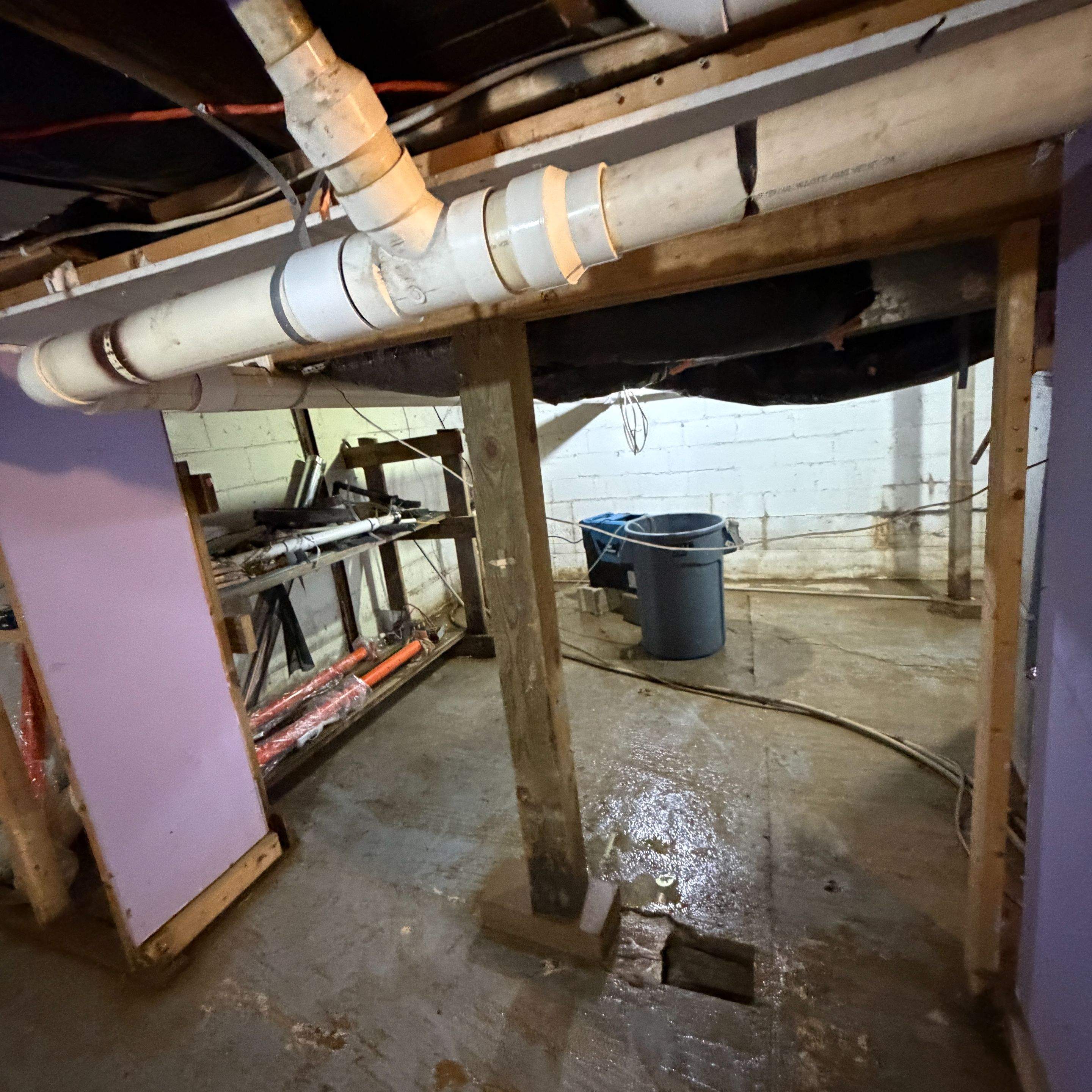
A homeowner on the west side of Oaklandon called us at 6:30 a.m. after a long overnight storm. His sump pump motor had burned out around 3 a.m., and roughly four inches of clean groundwater covered the entire 1,100 square foot basement. He had already moved boxes onto folding tables, which helped, but the carpet pad was saturated and the bottom four inches of drywall were dark and soft.
When our crew arrived within 90 minutes, we classified the loss as IICRC Category 1, clean water from a sanitary source. That classification matters because it shapes everything: what gets dried in place, what gets removed, and what insurance will reimburse. We pulled the carpet pad (almost never salvageable), floated the carpet to dry it from underneath, performed flood cuts on the drywall at 24 inches, and set 12 air movers and three dehumidifiers. Total drying time was four days. His out-of-pocket, after a $1,000 deductible, was zero. The full water damage restoration process ran just under $7,400, billed directly to his carrier.
One detail worth mentioning from that job: the homeowner had a battery backup sump pump that he had installed seven years earlier and never tested. The backup battery was dead. We see this constantly. A primary sump pump has a working life of around 7 to 10 years, and the backup battery typically needs replacement every 3 to 5 years. Oaklandon Water Restoration recommends testing both units twice a year, ideally when you change your smoke detector batteries. A 30-second test could have prevented the entire loss.
The Slow Leak Nobody Noticed for Three Weeks
Not every basement flood is dramatic. A retired couple in Oaklandon called us because they smelled something musty near the laundry room. A pinhole leak in a copper supply line had been dripping behind the washer for about three weeks. The footprint of the wet area was only six feet by eight feet, but the moisture had traveled.
When we pulled the baseboard, mold was already established on the back of the drywall. This is exactly the scenario we describe in our writeup on the 24 to 48 hour mold window. Once organic material stays wet past that window, microbial growth is the rule, not the exception. We containment-sealed the room with 6-mil poly, ran a HEPA air scrubber, removed the affected drywall and a section of subfloor padding, treated framing with an EPA-registered antimicrobial, and dried the cavity over five days. Their homeowners policy covered the water damage but excluded the mold remediation portion, which is common. Total job came to around $5,900, with $1,800 of that out of pocket.
The lesson from this job is about early detection. A simple water alarm, the kind that costs around $15 at any hardware store, would have alerted the couple within hours instead of weeks. We now recommend placing one behind every washing machine, near the water heater, under kitchen sinks, and next to the sump pit. Smart versions that ping your phone run about $40 and pay for themselves the first time they catch a slow leak.
The Mistake We See Most Often
A homeowner in Oaklandon tried to handle a 200 square foot basement flood himself with a shop vac and two box fans. He did a respectable job on the visible water. Three months later he called us about a smell and a soft spot near the stairs. The subfloor had stayed wet the entire time, and mold had spread under the LVP flooring. The original loss would have been a $3,500 job. The remediation we had to do, including tear-out of finished flooring he had installed in the meantime, came to over $11,000.
Drying a basement properly is not about removing the water you can see. It is about pulling moisture out of materials you cannot see, and verifying it with instruments. That is the part DIY almost always misses. Our blog on first steps after water damage walks through exactly what to do in the first hour before professional help arrives.
The Sewage Backup Nobody Wants
One Oaklandon family called us on a Sunday after their floor drain in the basement started pushing brown water during a heavy rain. The city main was overwhelmed, and their backflow preventer had failed. This is Category 3 water, the most contaminated classification, and it changes the entire job. Everything porous that touched the water came out: carpet, pad, the bottom of the drywall, particle board shelving, a sectional couch, and most of the kids' toys stored in plastic bins that had cracked.
We followed full sewage cleanup protocol: PPE for the crew, structural disinfection with a hospital-grade product, HEPA filtration during demo, and post-cleaning verification before we set drying equipment. Eight days of work, just under $14,000 total. Insurance covered most of it because they had a sewer and drain backup endorsement on their policy. Without that endorsement, this loss would have been almost entirely out of pocket. If you are in Oaklandon and you have not checked your policy for that specific rider, do it this week.
What These Jobs Have in Common
Across hundreds of basement flooding calls in central Indiana, the same handful of decisions separate a manageable claim from a financial disaster:
- How fast you shut off the water source or call for help. Every hour matters.
- Whether you document everything with photos and video before moving items.
- Whether the cleanup company classifies the water correctly under IICRC standards.
- Whether your policy has a sewer and drain backup endorsement.
- Whether drying is verified with moisture meters, not just visual inspection.
What to Do in the First Hour
If you walk downstairs and find standing water, the order of operations matters. Shut off power to the basement at the breaker before stepping into water, especially if outlets, the furnace, or the water heater are involved. If the source is a supply line, close the main shutoff valve. If the source is groundwater or a sewer backup, stay out of the water entirely until a professional arrives with proper PPE.
Photograph everything from multiple angles, including serial numbers on appliances and the high-water line on the walls. Call Oaklandon Water Restoration before you call your insurance agent. We can document the loss properly, give the adjuster the IICRC classification, and start mitigation within the policy's required timeframe. That sequence almost always produces a better claim outcome than the reverse.